Why I Read Fiction
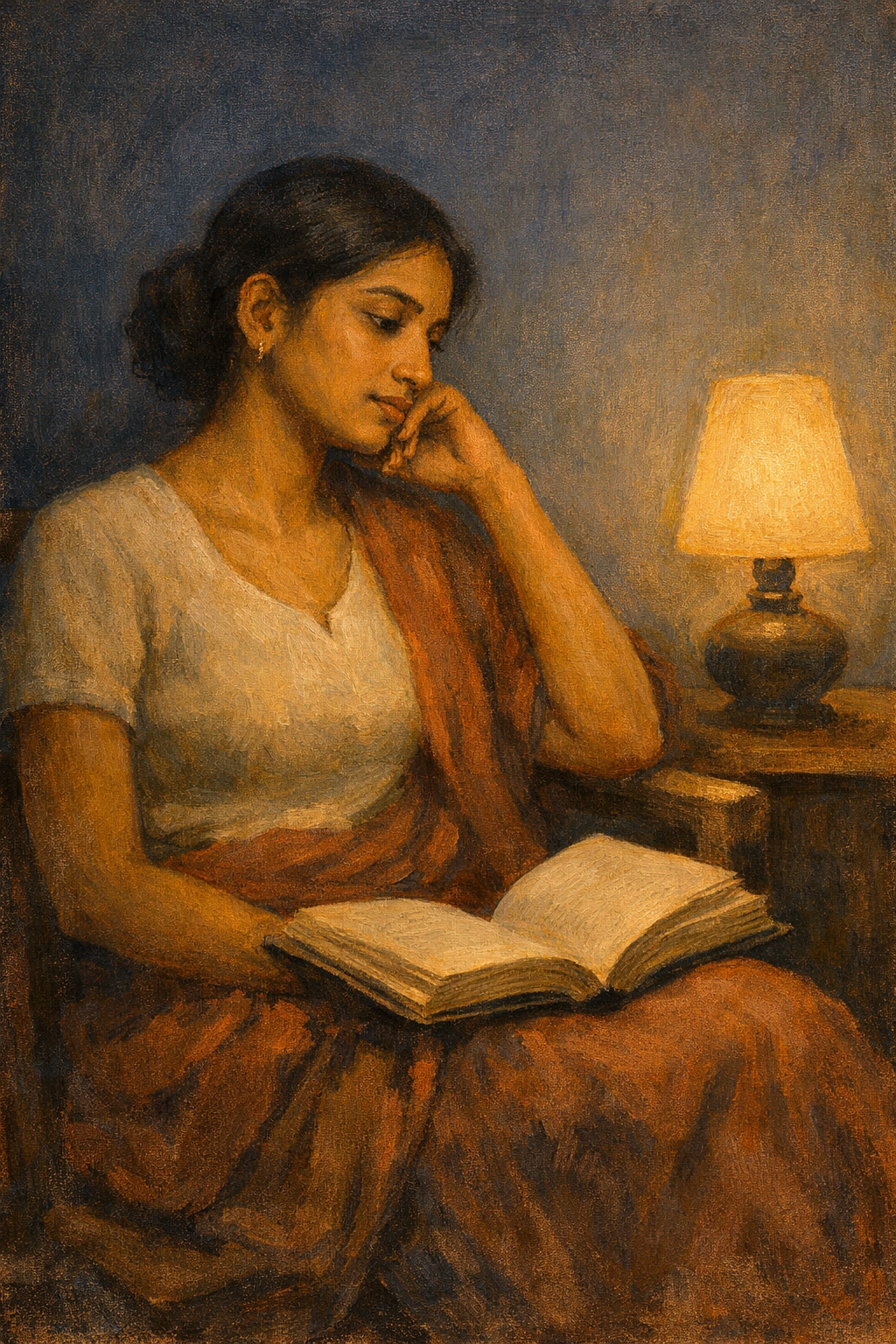
I found my way back to reading last year through fiction.
Not through discipline or goals, but through gentler books — stories that didn’t ask me to prove anything. Cozy novels with small worlds and kind pacing. Books like Before the Coffee Gets Cold and Days at the Morisaki Bookshop reminded me that a story doesn’t need to be complex to be binding. It just needs to feel human.
Those books restored my attention quietly. They made reading feel less like effort and more like inhabiting a room where something honest might happen.
Once that rhythm returned, I reached for bigger stories.
I wanted books that weren’t afraid of scale — narratives that carried time, history, and consequence. Reading Pachinko, The Covenant of Water, The Glass Palace, and American Gods taught me how ambition and tenderness can coexist. How stories stretch across generations without losing their emotional center. How vulnerability isn’t a weakness in writing — it’s the thing that gives scale its meaning.
Alongside these, I kept returning to quieter books — stories where very little happens outwardly, but everything shifts inward. Normal People made me pay attention to silences and misalignment. What I Talk About When I Talk About Running showed me how repetition, solitude, and habit can carry a life. These books taught me that depth often arrives softly.
Somewhere along the way, I realized I wasn’t just reading widely.
I was reading differently.
Reading fiction is how I learn to write — not by imitation, but by attention.
Without planning it, I had started building a syllabus. Not an academic one — a personal sequence. It began with ease, moved toward ambition, and kept circling back to emotional truth. Reading became a way to study storytelling without turning it into a task.
I read fiction to notice how writing feels before I think about how it works. I notice rhythm. Restraint. Where a writer pulls back, and where they let emotion accumulate. I notice when a sentence trusts the reader enough to leave something unresolved. Over time, this has helped me move closer to my own writing voice — one that values clarity over cleverness, depth over performance, and honesty over polish.
Lately, I’ve felt drawn toward classics.
Part of this shift came from a simple exercise in Essentialism: reading literature written before the Industrial Revolution, as a way to step outside a worldview shaped almost entirely by productivity. Older books carry a different tempo. They ask slower questions. They take meaning seriously.
Classics don’t explain ideas — they live them.
Little Women holds questions of free will, ambition, and feminism inside domestic life, long before those ideas had modern names. Frankenstein explores creation and responsibility with an ethical urgency that still feels unsettled. The Time Machine uses imagination not to escape reality, but to interrogate progress itself.
What draws me to these books is not just their endurance, but their trust. They allow contradiction. They resist neat conclusions. They let a reader sit inside uncertainty.
When I look at everything I’m drawn to — cozy fiction, epics, intimate novels, classics — the same threads keep repeating. Attention is treated as sacred. The interior life matters. People are shaped by systems they didn’t choose. Meaning isn’t prescribed; it’s lived into.
Fiction lets me sit with complexity without rushing to resolve it.
I read to enter other worlds.
I read to understand this one more clearly.
And I read, slowly and imperfectly, to find my own writing voice along the way.